Releasing ProxySQL 2.0.9
ProxySQL is proud announce the release of the latest stable version of ProxySQL 2.0.9 on 17th of February 2020. ProxySQL is a high performance, high availabi
by Nick Vyzas
News, technical articles, and announcements from the ProxySQL team.
ProxySQL is proud announce the release of the latest stable version of ProxySQL 2.0.9 on 17th of February 2020. ProxySQL is a high performance, high availabi
by Nick Vyzas
Proudly announcing the release of the latest stable version of ProxySQL 2.0.8 on 5th of November 2019. ProxySQL is a high performance, high availability, pro
by Nick Vyzas
Proudly announcing the release of the latest stable version of ProxySQL 2.0.7 on 2nd of October 2019. ProxySQL is a high performance, high availability, prot
by Nick Vyzas
ProxySQL Technology Day at Ghent, Belgium on Thursday, October 3rd, 2019 We are proud to announce our inaugural free ProxySQL Technology Day held in Ghent, Bel
by Nick Vyzas
The latest enhancement in ProxySQL v2.0.0 is the native support of Galera Cluster. No more need to use an external script within the scheduler like explained al
by Nick Vyzas
One of the more popular solutions for a DBaaS in today's market is Amazon's RDS / Aurora service. Historically Amazon RDS was quite popular however Aurora has b
by Nick Vyzas
This topic has been up in the air for a long time. What would be the best approach: get less large boxes or smaller for the same price? What would be pros and c
by Nick Vyzas
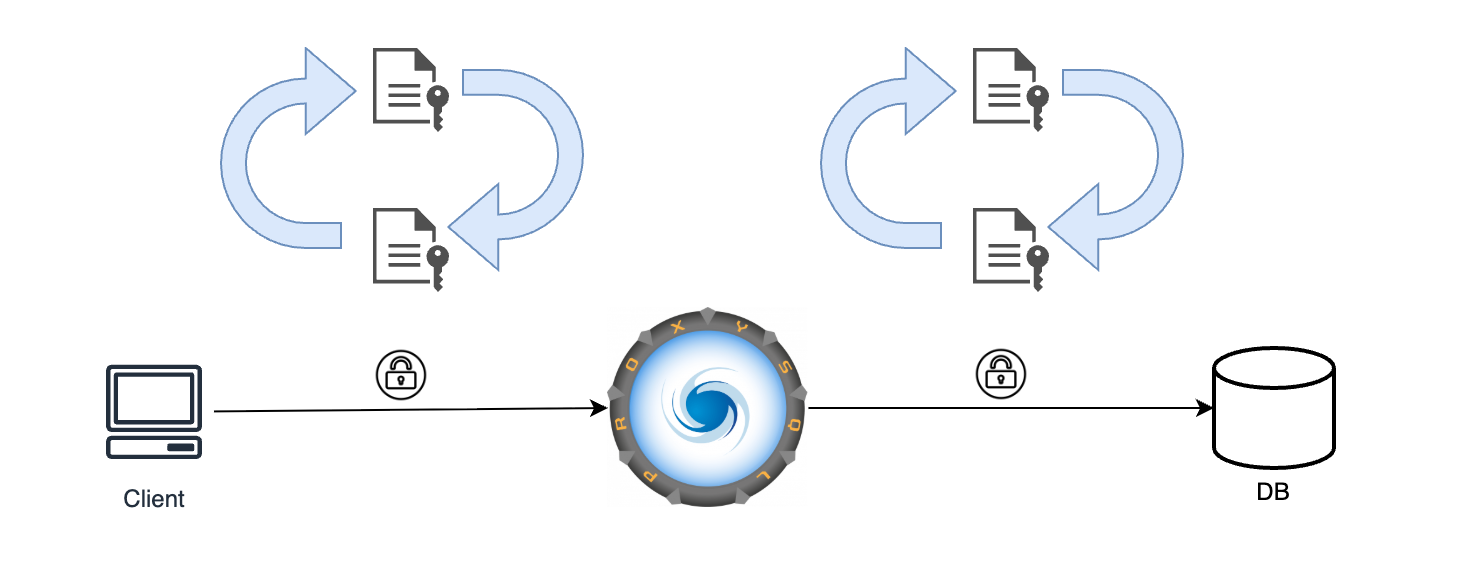
MySQL, ProxySQL & SSL As we all know, MySQL supports using SSL to secure connections by encrypting the data in transit and protecting it from snooping on the w
by Nick Vyzas
ClickHouse and MySQL do not have the same SQL syntax and functions ProxySQL is a popular open source, high performance and protocol-aware proxy server for MySQ
by Nick Vyzas
Adaptive query routing based on GTID tracking ProxySQL is a layer 7 database proxy that understands the MySQL Protocol. It provides high availability and high
by Nick Vyzas
ProxySQL's new routing algorithm to handle hundreds of thousands of schemas/shards ProxySQL is a service designed to scale and handle traffic in very large setups. In the past we already showed examples of how ProxySQL can handle thousands of MySQL servers, and millions (yes, millions!) of distinct...
by Nick Vyzas
Comparing ProxySQL 1.4.3 vs. 1.4.4 ProxySQL 1.4.4 has recently been released (GA on Dec 20, 2017) which naturally leads to the question “What performance gains
by Nick Vyzas
ProxySQL 1.4.2 now supports Native Clustering!!! ProxySQL enters the club of the software associated with the buzz word "Cluster". This blog post is the first
by Nick Vyzas
How to run multiple ProxySQL instances Some time ago I wrote about the ability of running multiple ProxySQL instances listening on the same port(s). This capa
by Nick Vyzas
MySQL Query Cache Before writing about ProxySQL Query Cache, let's see what MySQL Query Cache is. MySQL Query Cache is a very interesting feature that, quot
by Nick Vyzas
In a previous post I wrote about how read/write split is implemented in ProxySQL, and what I believe is the best practice for read/write split on top of MySQL servers: start sending all traffic to MySQL master identify what queries can be routed to the MySQL
by Nick Vyzas
While me and Fred were presenting Inexpensive Datamasking for MySQL with ProxySQL at FOSDEM 2017, we got a very interesting question: can ProxySQL be used to ob
by Nick Vyzas
Query routing is one of the core features of ProxySQL. Read/write split is perhaps one of the most common query routing use, while the other most commonly used
by Nick Vyzas
Since its genesis ProxySQL was designed to be reconfigurable at runtime without restarting it. There are only 2 exceptions: changing the listening ports (work i
by Nick Vyzas
Few days ago MariaDB announced MaxScale 2.1.0 Beta, and among the new Query Performance capabilities there is Query Cache Filter. Query Cache was among the very
by Nick Vyzas
Showing 81–100 of 108 posts